Your January Doesn't Have to Be Perfect


Did you make a new resolution on January 1, 2025?
A new year has begun. On January 1, 2025, you probably made promises to yourself like this:
“This year will be different. I’ll wake up at 5 a.m. every day to work out, eat three perfectly balanced meals, read self development books at night, and even start a new hobby on the weekends…”
You created an ambitious plan. The first page of your diary was full of motivation. You bought new workout clothes and ordered health supplements. “This time, I really felt like I could do it.”
But now, two thirds of January has already passed.
What happened to those resolutions?
This isn’t failure. You’re not the only one.
Recently, a trend called “Soft January” has been spreading quickly, especially on TikTok and Instagram. The UK lifestyle magazine Marie Claire described it as “wildly viral,” and countless creators are pouring out content under this hashtag.
The mood in January 2026 is clearly different.
People exhausted by last year’s extreme challenges (75 Hard, Dry January, and so on) are now looking for a different approach. Instead of “flipping your life overnight,” they want a way to track, acknowledge what they truly feel, and build a narrative they can sustain for the long run.

Soft January is not just another productivity challenge. It’s a shift in attitude to protect your wellness.
It’s the opposite of the traditional January reset (Dry January, extreme dieting, intense workouts).
The core idea is simple:
Small. Slow. Sustainable.
UK clinical psychologist Dr. Tracy King explained it this way in an interview with Marie Claire:
“Traditional New Year’s resolutions often rely on self criticism or urgency, which can trigger the body’s stress response. Soft January recognizes that many people start the year already tired, and a gentler approach can regulate the nervous system, making change easier to maintain.”
Why is a “gentle” approach more effective?
1. It helps you escape the All or Nothing trap
“Do it perfectly, or don’t do it at all.”
This mindset destroys our wellbeing. If you don’t execute 100% of your plan, you feel like you failed, and eventually you give up entirely.
But real wellness isn’t about perfection. Even 70% matters. Even 30% is better than nothing.
Soft January embraces that truth. The key mindset is: “If I couldn’t do it today, I can try again tomorrow.”
2. It lowers stress and supports real recovery
Extreme goals keep your body in a constant state of tension. Every time your alarm goes off in the morning, the pressure of “I have to do it again” becomes stress.
As the stress response grows, cortisol levels rise and your body shifts into survival mode. In that state, it’s hard to regulate emotions and even harder to prevent burnout. A gentle approach calms your nervous system and helps you keep going with change in a lower anxiety, lower pressure state.
Wellness isn’t “try harder.” It’s “be wiser.”
3. It builds sustainable wellbeing habits
BJ Fogg, a leading researcher in habit formation, says that “ease matters more than motivation.” Not big dramatic goals, but actions small enough to do every day are what eventually become habits.
A goal like “exercise for one hour every day” collapses within three days. But “walk for 15 minutes every day” can last for a whole month. And that 15 minutes later becomes 30 minutes, then one hour.
Real wellness doesn’t come from dramatic transformation, but from repeating small actions.
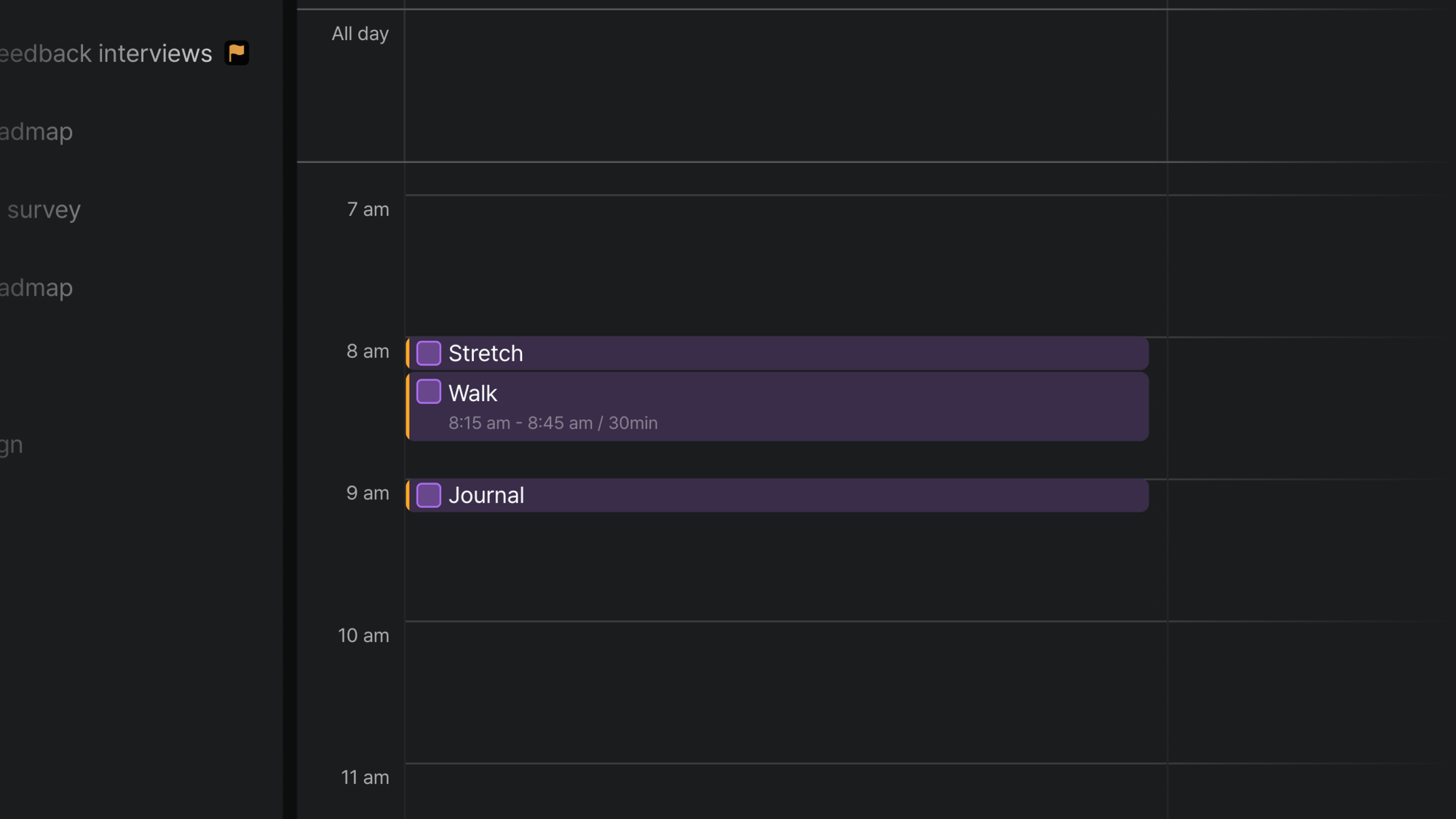
💡 Add a Small Block in Arch Calendar
Soft January: how do you actually practice it?
So how do you begin, in a concrete way? Here are five principles for creating change while protecting your wellbeing.
1. Set a goal you can do “even on your worst day”
The key question is this: “Could I still do this on my worst day?”
A real goal is something you can do even after a sleepless night, even when the weather is terrible, even when work is overwhelming. That’s what sustainable wellness looks like.
For example:
❌ “Go to the gym at 7 a.m. every day and work out for an hour”
✅ “Do five minutes of stretching at home”
❌ “Cook healthy meals every day”
✅ “Keep consistent meal times for three meals”
❌ “Do one hour of self development every day”
✅ “Write a five minute journal before bed”
Does it feel too easy? That’s the point. Wellness isn’t a grand challenge. It’s the repetition of small acts of self care.
2. Change only one thing at a time
Trying to change ten things at once and failing all ten is far worse for your wellbeing than changing just one thing successfully.
This month, focus only on building an exercise routine. Next month, organize your eating pattern. The month after, adjust your sleep schedule.
When one habit becomes stable, other habits start to follow.
Wellbeing is a system. When one part improves, the rest tends to improve with it.
3. Build structure first
Many people start January with “restriction.” Quit alcohol. Stop eating sweets. Cut down on social media.
But a more effective approach is “addition.” When you add a good routine, bad habits naturally get pushed out.
For example:
- Instead of forcing yourself to quit drinking → add an evening walk routine
- Instead of resisting snacks → add a routine of eating at set times
- Instead of cutting SNS time → add reading to your morning routine
Replacing is much easier than banning, and it’s much better for your wellbeing.
4. Aim for a day you protected your wellbeing, not a perfect day
It’s far more valuable to have thirty calm 60 point days than to create three 100 point days and burn out.
Redefine what “consistency” means:
- Consistency is not doing it every day
- Consistency is taking care of yourself and coming back again
Missing a day or two is fine. Don’t blame yourself. Just start again. That’s real wellness.
5. Track it, but not obsessively
If you want to see change, you need to track it. But you don’t have to monitor every moment.
Keep it simple:
- Did I do one small act of self care today?
- Even if I didn’t, that’s okay. What’s my plan for tomorrow?
That’s enough.
January isn’t over yet
If today is January 22, it’s not too late. In fact, now is the real start.
Plans made with the excited energy of January 1 are often too ambitious. But at this point, you can see what was too much and what wasn’t sustainable.
Because you went through that experience, you can now build a truly sustainable wellness plan.
Soft January isn’t only for January. It’s an approach you can carry into February, March, and the entire year. Because “starting gently” isn’t a tactic. It’s an attitude toward how you treat yourself.
Start again, gently
Don’t blame yourself for giving up on your New Year’s resolutions. That’s not your fault.
Now it’s time to change the approach.
Instead of a huge goal, one small action.
Instead of a perfect day, a day you took care of yourself.
Instead of extreme change, gentle change.
It’s not too late to start today. No, today is the real beginning.
Start by adding one small block for yourself to your calendar.
Those small blocks will stack up, and eventually create a sustainable wellness life.
Starting gently with Arch Calendar
Open Arch Calendar right now, and add one small action you want to do for yourself tomorrow to your calendar.